
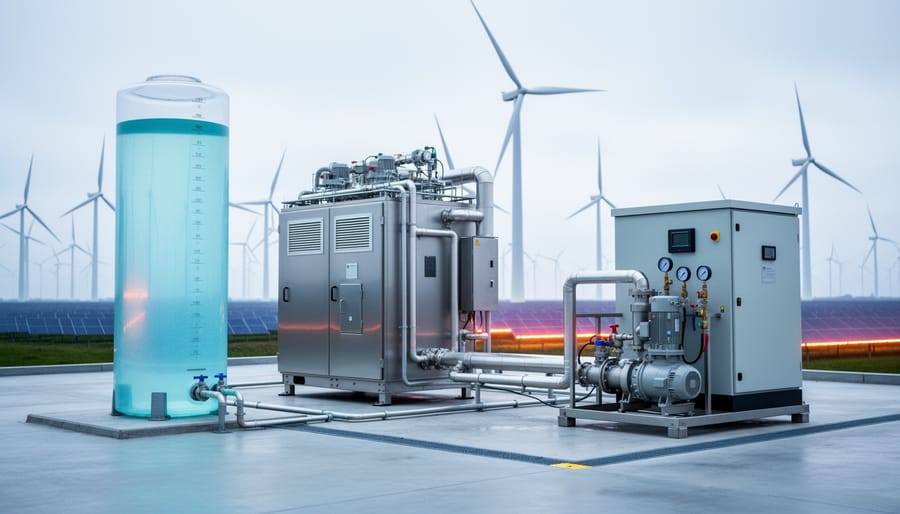
Hydrogen for energy storage is a method of converting surplus renewable electricity into hydrogen gas through electrolysis, storing it in compressed or liquid form, and later converting it back to electricity or using it as fuel when demand exceeds renewable generation. This process creates a chemical battery that can hold energy for weeks or months, far exceeding the typical discharge windows of lithium-ion systems.
As renewable energy installations surge globally, grid operators face a fundamental challenge: solar panels produce power when the sun shines, not necessarily when consumers need it most. Wind turbines spin at nature&#…

Research and development is the systematic process organizations use to create new products, improve existing technologies, and solve complex problems through scientific investigation and technical innovation. R&D teams bridge the gap between scientific discovery and market-ready solutions, transforming theoretical concepts into tangible advances that improve daily life.
At its core, R&D exists to drive progress. Companies invest in research and …